The English translation is below
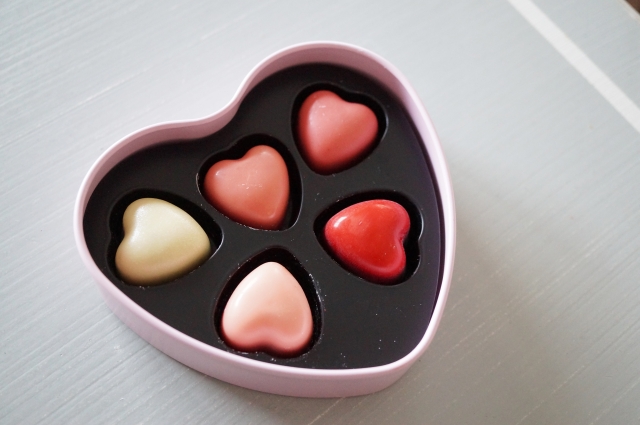
この時期、お店に行けば、バレンタインのチョコレートコーナーを
見ない日はありません。日本のバレンタインは欧米のマネをして
取り入れたものの、相変わらず日本独自の路線で発展させています(笑)
本来のバレンタインは恋人同士や夫婦がお互いにプレゼントや
カードを贈るんですよね?すでにパートナーである相手に
改めて愛を伝える日なんですよね?
日本はというと、女性が男性にチョコレートを贈ることによって
愛を告白する日!というスタイルなのです

それは1950年の頃、お菓子会社が仕掛けたプロモーションから
始まりました。当時、女性が自由に愛を告白することがまだ珍しく
控えめだった時代において、『愛の贈り物としてチョコレートを』
と、マスコミを通じて大規模に宣伝が行われたのです
当時の日本女性は受け身でいることを美徳とされて
いたのでしょう。それゆえ新しい文化として広く受け入れられ
自ら起こすアクションの解禁日となりました
そりゃ〜キャンペーンに乗っかりたくなりますよね♪
1970年代に入ると、小中高生の間で爆発的に流行し、
完全に日本の年中行事として定着しました
さあ、ここから日本独自の進化がはじまリます♬
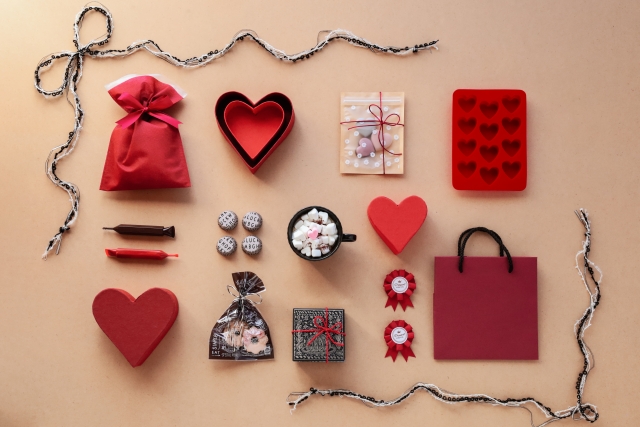
1970年代は本命チョコがアツかった時代!文字通り「告白の日」
としてソワソワドキドキの日でした。小中学あたりだと基本的に
チョコを学校に持ってくるのは禁止されているので、バレないように
渡す。。。というのもスリリングでした。でも先生たちも大目に見て
くれてたように思います
1980年代には、お返しとしての3月14日「ホワイトデー」が
またしてもお菓子業界の策略によって定着(笑)
お返しの習慣がある、日本人の義理堅さに目をつけた
らしいです。なんてこと。。。(汗)
なんで「ホワイト」なのかというと、調べてみたら
純潔のイメージとか、砂糖は白いから、とか
とってつけたようなグダグダな理由でした(笑)
この日はチョコをもらった男性が、女性にクッキーや
キャンディーなどをお返しします。でも、アクセサリーなど
その女性が欲しがるものをプレゼントするような
頑張っちゃう男性も多いですよ
1990年代は、職場の人間関係を円滑にする「義理チョコ」
が全盛期に入ります。学校でも本命じゃないけど仲の良い
男の子にあげたりしますね。ここで気をつけたいのは
本命と勘違いされないように、値段が安めのものや
明らかにパッケージで義理と分かるようにすることです
2000年に入ると、友達同士で交換する「友チョコ」
自分のご褒美のために買う「自分チョコ」など多様化してきます

今となっては、義理チョコはみんながめんどくさくなって
廃れていき、本命チョコも細々と続いているようですが
圧倒的に友チョコを贈り合うことが多いです。もはや
「友達との絆を深める交換会」という女子同士で盛り上がるイベントになり
男子が入る隙がない感じになってしまいました
次回は、実際私たちがどんな風にこの日を過ごしていたのか
お伝えしようと思います🎵
At this time of year, it’s almost impossible to visit a store without seeing a Valentine’s chocolate section.
Valentine’s Day in Japan was originally inspired by Western traditions, but it has since developed along a uniquely Japanese path (with a few twists, of course).
In its original form, Valentine’s Day is a time when couples or married partners exchange gifts or cards with each other, right?
It’s a day to reaffirm love with someone who is already your partner.
In Japan, however, Valentine’s Day is quite different.
Here, it’s traditionally seen as the day when women confess their feelings by giving chocolate to men.
It all began around the 1950s, with a promotional campaign launched by chocolate companies.
At a time when it was still uncommon—and even considered improper—for women to openly confess their love, chocolate was promoted on a large scale through the media as “a gift of love.”
Back then, Japanese women were often expected to be modest and reserved.
Perhaps that is why this new custom was so widely embraced—it became a kind of “permitted day” for women to take the initiative and express their feelings.
Well… who wouldn’t want to join in on a campaign like that? 🙂
By the 1970s, Valentine’s Day had spread explosively among elementary, junior high, and high school students, becoming firmly established as an annual event in Japan.
And from here on, Valentine’s Day began to evolve in a way uniquely its own ♬
The 1970s were the era when honmei-choco—chocolate given to someone you truly liked—was at its peak.
Valentine’s Day was literally a day of confession, filled with nervous excitement and fluttering hearts.
In elementary and junior high school, bringing chocolate to school was technically forbidden, so secretly giving it without getting caught added an extra thrill.
Still, it felt like the teachers were quietly looking the other way.
In the 1980s, March 14th—White Day, a day for returning Valentine’s gifts—became firmly established once again thanks to a strategy devised by the confectionery industry (yes, again!).
Apparently, they had their eye on the Japanese sense of obligation and the custom of returning favors.
Seriously… what a move. (sigh)
As for why it’s called “White” Day, a little research turns up explanations like “white symbolizes purity” or “sugar is white”—reasons that feel somewhat tacked on and unconvincing (laughs).
On this day, men who received chocolate on Valentine’s Day give gifts such as cookies or candies in return.
That said, many men go the extra mile, choosing items the woman actually wants—like accessories—as their return gift.
In the 1990s, giri-choco—“obligation chocolate” given to maintain smooth workplace relationships—entered its peak.
At school as well, girls would give chocolate not only to someone they had a crush on, but also to boys they were simply on good terms with.
One important thing, however, was to avoid being misunderstood as giving honmei (romantic) chocolate.
To make that clear, people chose inexpensive chocolates or ones with packaging that made it obvious they were meant as giri.
From the 2000s onward, Valentine’s Day in Japan became increasingly diverse.
Friend-choco, exchanged among friends, and self-choco, bought as a treat for oneself, also became common.
These days, giri-choco has largely faded away, simply because people grew tired of it.
Honmei-choco still exists, but on a much smaller scale.
By far the most common style now is exchanging friend-choco.
Valentine’s Day has essentially become a lively event where girls bond with one another through exchanging chocolates—almost like a “friendship exchange.”
As a result, it can feel like there’s hardly any room left for boys to join in.
Next time, I’d like to share how we actually spent Valentine’s Day back then 🎵