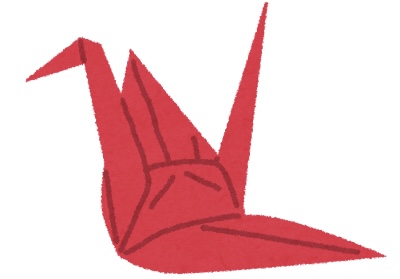
The English translation is below
折り紙は日本の伝統的な文化的芸術であり、少なくとも
1000年以上の歴史があるとされています
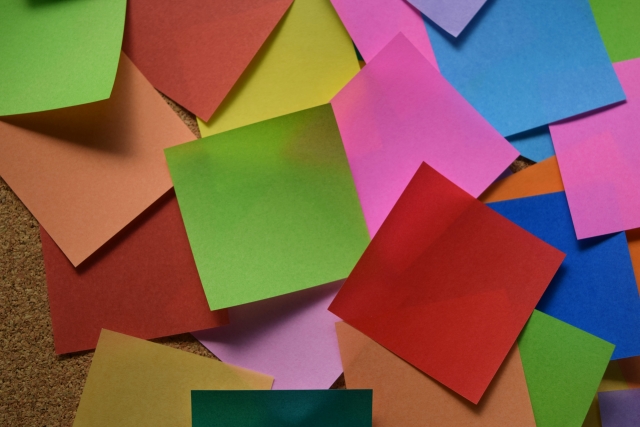
折り紙の起源については、はっきりと分かっていないそう
なんですけど、平安時代(794〜1185年)の貴族たちが
紙を折って贈り物や大切なものを包んで遊んでいた、という
話が伝えられています。この時代は礼儀作法が重んじられ
薬味やお金、お香、扇子などを包むためのさまざまな折り紙が
生まれました。じかに物を置くのではなく、紙をひと折りすることに
感謝の心や、やさしさを込めたんだとか。
日本は過剰包装だ〜!って言われるルーツは
どうやらここにあるみたいですね
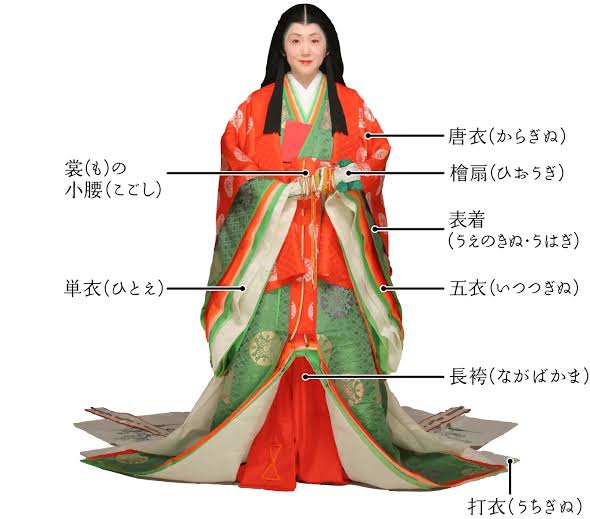
この時代に着ていた十二単(じゅうにひとえ)にも
折り紙の色合わせや、紙の重なりの工夫を取り入れて
楽しんでいたようです
…言われてみればナルホド〜って思います
実際12枚ではないんですが、重さは10〜15キロ!
和紙の技術は確立したものの、紙は高級品の時代だったので
神聖なものとされたのでしょうか、神への供物を包むような
神事に用いられ、儀礼折りとして発展していきました
江戸時代(1603〜1868年)になると和紙の生産量も増え
折り紙が広く普及しました。そしてその時代から、今日まで
受け継がれてきたものを『伝承折り紙』と言います。
親から子へ、手から手へと伝えられたもので、いつ誰が
最初に考えたのかは分からないそうです
私にとっても小さい頃は、折り紙はとても馴染みがあり
折って遊んだり、中に手紙を書いたりしていましたね
今回は長い歴史を経て、伝えられてきた作品をご紹介します!
かぶと
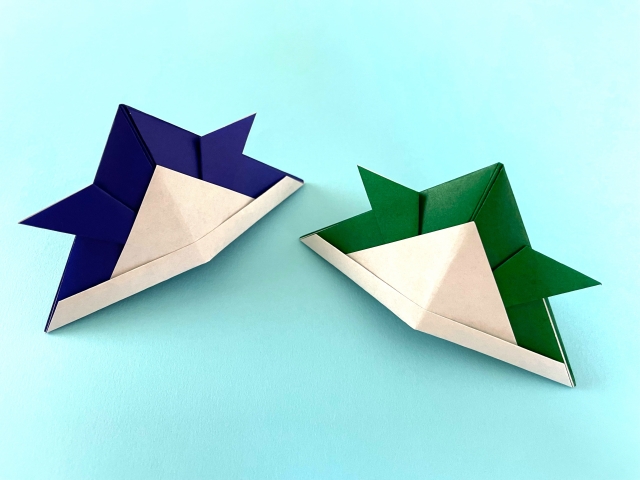
5月の端午の節句のときに、きっと日本中の幼稚園や小学校で
作られたことでしょう。新聞紙などの大きな紙で折れば
頭にかぶることもできるんですよ
かたつむり
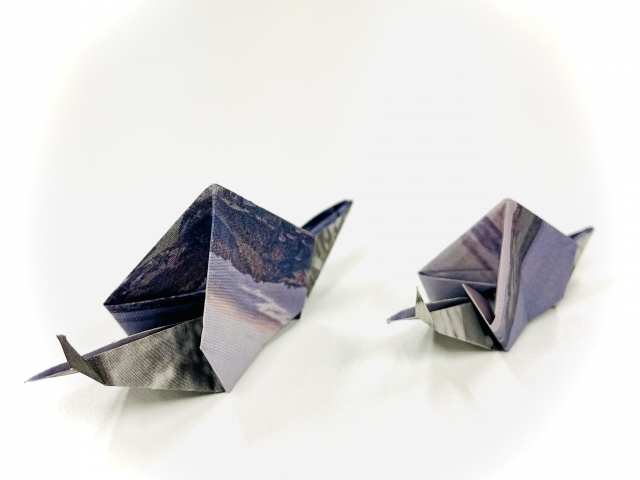
昔はよく葉っぱの上に乗っているのを見たんですけど…
最近お目にかかりませんねぇ。
セミ
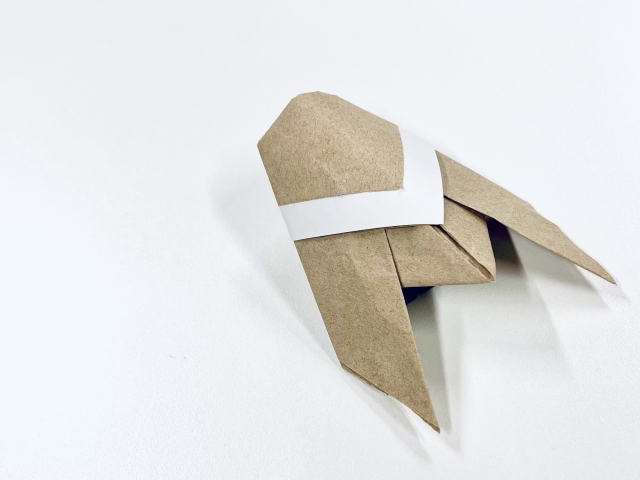
比較的簡単に作れるうえに、特徴がよく表現されてます
かめ
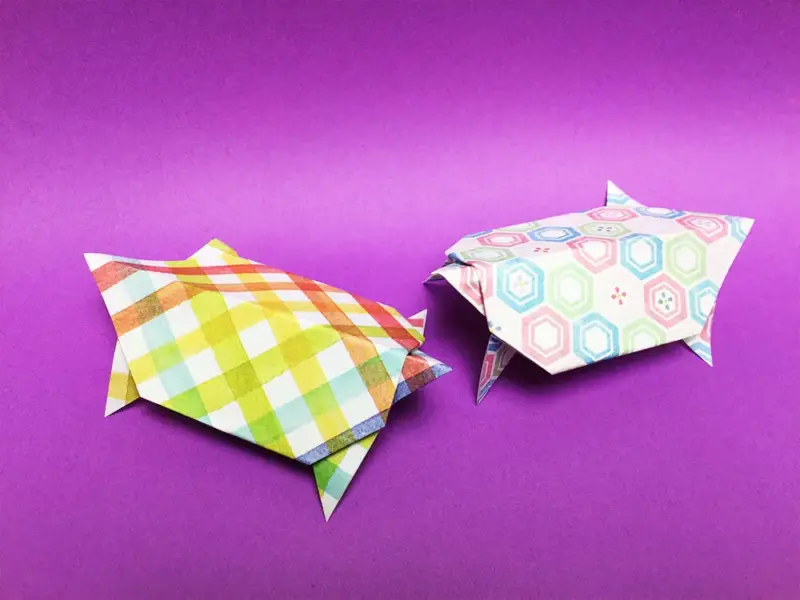
亀は長寿や夫婦円満の象徴とされて、折り紙でも
古くから親しまれていました
つる
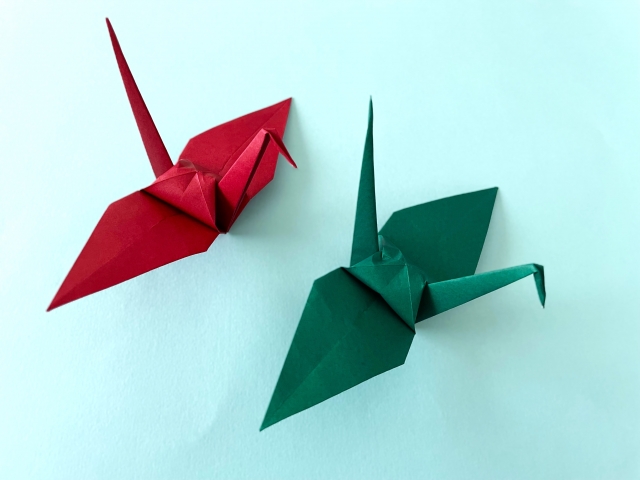
誰もが一度は折ったことのある、定番中の定番!
なぜ日本人はやたらと鶴を折るのか?というと、私たちの
先祖は鶴を『幸せ告げる使者』として迎え入れていたそうなんです
「田んぼに鶴が舞い降りると、富と福が入る」
「鶴の夢を見ると長生きする」など鶴にまつわるさまざまないわれも
あるらしいです
鶴を折っていた時によく思っていたのは、
この位の難易度って、器用と不器用の分かれ目だなぁと…
くちばしや尾っぽがピシッとキマる人は器用です
私は後者で…いつも裏紙の白い部分が見えちゃってましたね
遊んだり、実用的な作品もあります
ピョンピョンがえる
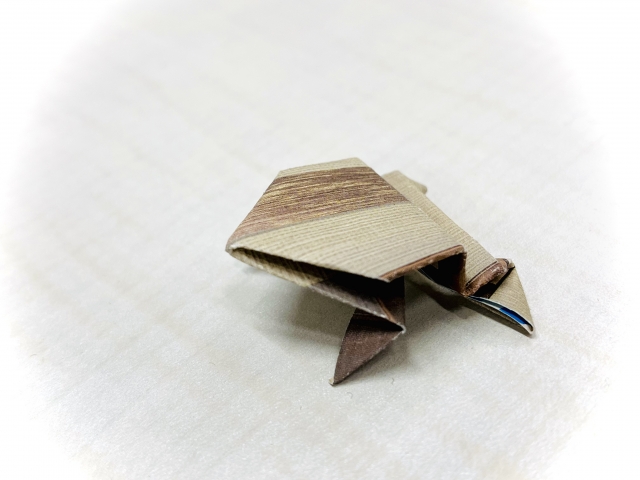
後ろのバネになっている部分をゆびで押さえると
カエルがピョンと跳ねます
ふうせん
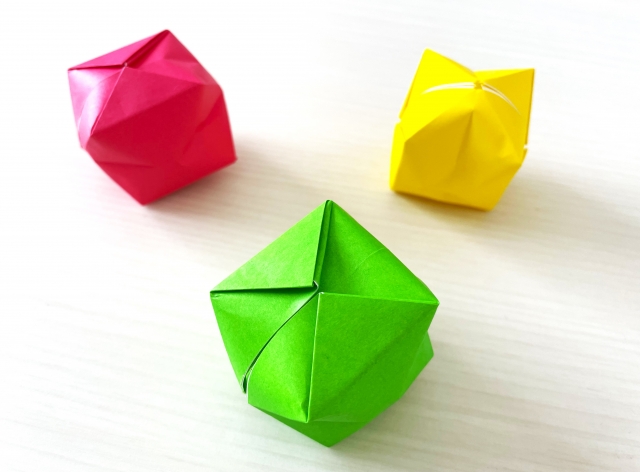
穴から息を吹き込んで、立体的にふくらませます
下から手で打って、落とさないようにポンポン遊びます♪
しゅりけん
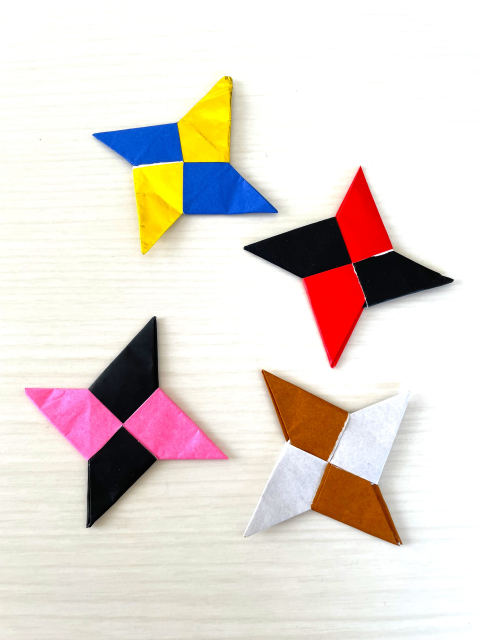
男の子大好き!な折り紙です
2枚の紙を組み合わせて作るので配色を変えて
何個も作るのですよ♬
はこ
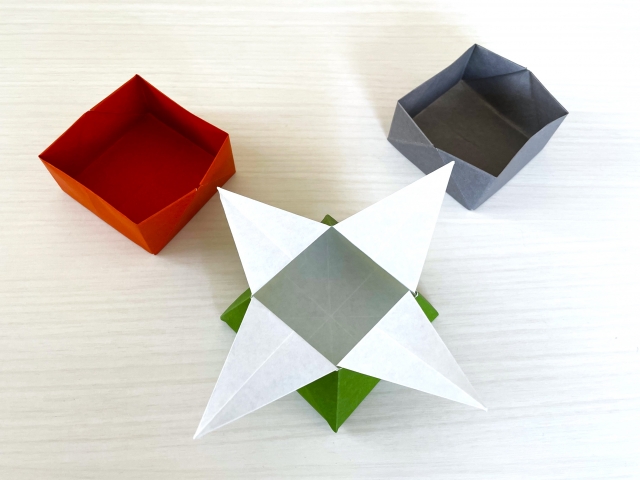
真ん中の箱は「つの香箱」です。江戸時代に盛んだった
“香道“の道具を入れる四角い箱を“香箱“といいます
こちらは角がついているためこう呼ぶそうです
節分の時、豆を入れたりしたな〜
何か作ってみたいものあったでしょうか?
YouTubeなどの動画の方が分かりやすいと思います
ぜひ鶴レベルを目指してみてくださいね!
Origami is a traditional Japanese art form that is believed to have a history of at least a thousand years
The exact origins of origami are not clearly known, but it is said that during the Heian period (794–1185), aristocrats enjoyed folding paper to wrap gifts and precious items.
This was an era that valued etiquette, and various styles of folded paper were created for wrapping things such as seasonings, money, incense, and fans.
Folding the paper, rather than placing an item directly, was seen as a way to express gratitude and thoughtfulness.
Some say Japan’s love for elaborate packaging today can be traced back to this tradition.
Even the junihitoe—the twelve-layered court robe worn at the time—reflected the spirit of origami through its artful layering of colors and fabrics.
Come to think of it, that really makes sense!
The robe wasn’t actually made of twelve layers, but it could weigh as much as 10 to 15 kilograms!
Although the technique of making washi paper had been established, paper was still a luxury item at the time.
It was regarded as something sacred and was used in religious rituals, such as for wrapping offerings to the gods.
From these practices, ceremonial folding—known as girei-origami—gradually developed.
During the Edo period (1603–1868), the production of washi increased, and origami became widely popular among the people.
The traditional designs that have been passed down from that time to the present day are known as denshō origami, or “traditional origami.”
It has been passed down from parents to children, from hand to hand, and no one really knows who first came up with it.
Origami was also a familiar part of my childhood. I used to fold paper just for fun, and sometimes I’d write little notes inside the folds.
This time, I’d like to introduce some origami works that have been passed down through the ages!
Kabuto (Samurai Helmet)
This origami design is probably made in kindergartens and elementary schools all over Japan during Tango no Sekku, the Boys’ Festival in May.
If you use a large sheet of paper, like a newspaper, you can even make one big enough to wear on your head
Snail
I used to see them often on leaves back in the day… but nowadays, you hardly ever come across them
Cicada
It’s relatively easy to make, and its distinctive features are well represented.
Turtle
Turtles have long been regarded as symbols of longevity and marital harmony, and they have been a beloved subject in origami for generations
Crane
The crane is a classic origami design that almost everyone has folded at least once. But why do Japanese people fold cranes so much? It seems our ancestors welcomed cranes as “messengers of happiness.”
There are many beliefs associated with them: “When a crane descends into a rice field, wealth and good fortune follow,” or “Seeing a crane in a dream brings longevity.”
When I used to fold cranes, I often thought that the difficulty level really separates the skillful from the clumsy…
If you can make the beak and tail crisp and precise, you’re considered skillful.
I was definitely in the latter group—my cranes often showed the white side of the scrap paper!
There are origami pieces meant just for fun, as well as practical ones you can actually use.
Jumping Frog
This playful origami design can actually “jump” when you press down on its back! It’s been a favorite among children for generations.
Paper Balloon
You blow into the hole to inflate it into a 3D shape. Then you can tap it from below with your hands and play by keeping it bouncing in the air!
Shuriken (Throwing Star)
This is a favorite origami among boys!
It’s made by combining two sheets of paper, so you can play with different color combinations and make lots of them!
Box
The box in the center is called a tsuno-kōbako (“horned incense box”). In the Edo period, square boxes were commonly used to hold tools for kōdō, the art of appreciating incense, and this one is called “horned” because of its pointed corners.
I remember using it to hold beans during Setsubun!
Was there anything here that you’d like to try making? I think videos on YouTube are easier to follow, so give it a shot—aim for the level of a crane!