The English translation is below
さぁ、いよいよ拝殿でのお参りです
拝殿(はいでん)
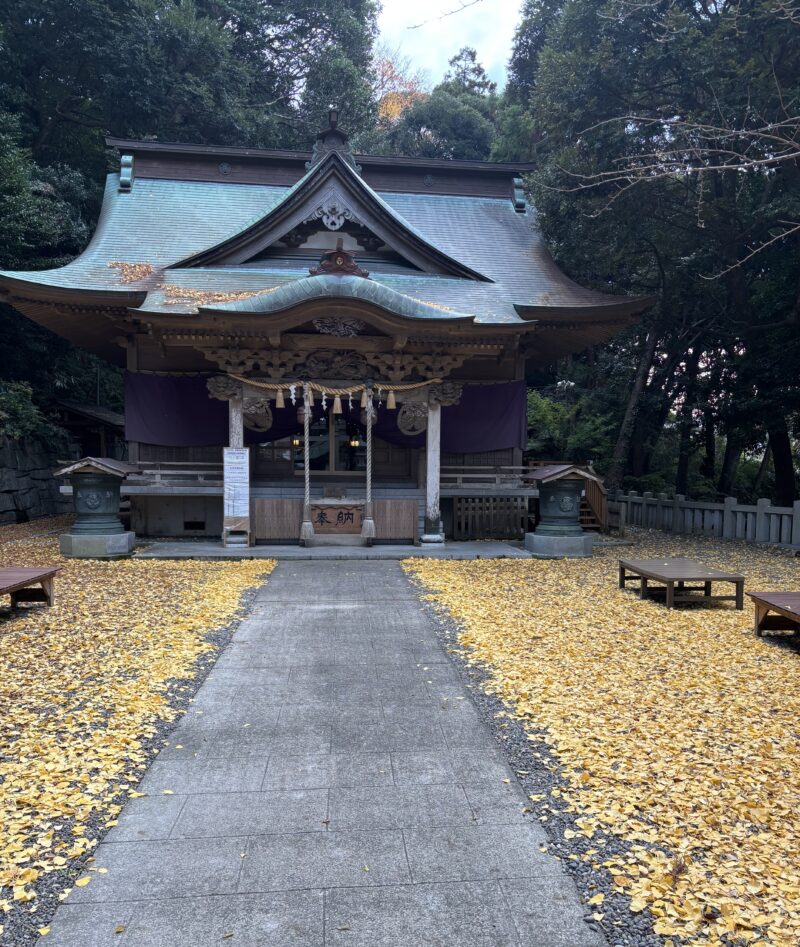
銀杏の落ち葉が彩りを添えていました。演出か?!と
思ったくらいです
◇お参りの作法 【ニ礼ニ拍手一礼】
①お賽銭を入れる。お賽銭箱の間にそっと落としましょう
投げ入れてはいけませんよ。跳ね返って箱の外に
飛んでいくこともありますから…
②(もしあれば)鐘を鳴らす
神様を呼び出す合図です。鈴緒(下がっているひも)
とうまくぶつからなくて、きれいに鳴らすのはなかなか
難しいのですよ
③深く二回お辞儀をする
④両手を胸の前で合わせ、二回手を叩く
この時にお願い事をしたり、感謝の気持ちを伝えます
⑤深く一回お辞儀をする
裏技。。。とまではいかないですが、有名な神社なら
たくさん参拝者がいるので、自分の番が来る前に前の人の
やり方を見て覚えればいいんです!手水の作法も
私も毎回それで乗り切ってます。私たちだって
たまにしか行かなければ忘れちゃいますもん
しれっと、分かってます風の演技するのがコツです♪
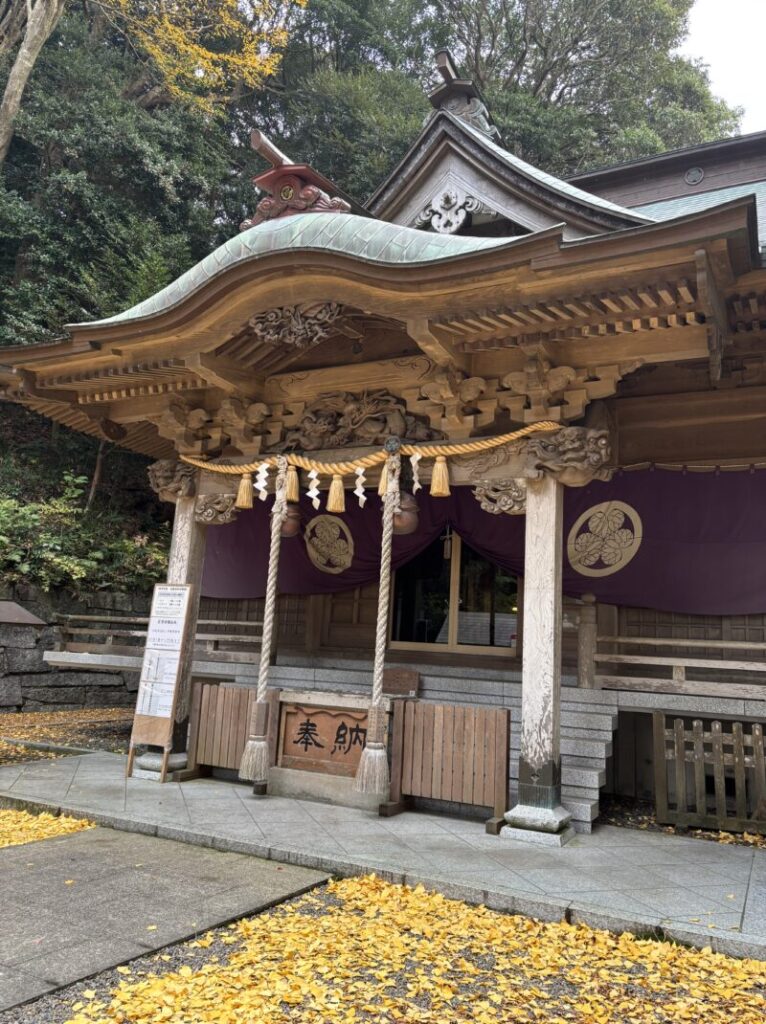
奥の紫の垂れ幕に、描かれているマークが見えますか?
葵の御紋は江戸幕府を開いた徳川家の家紋として有名です
徳川家の御三家である水戸藩の徳川光圀(とくがわみつくに)
がこの神社を深く信仰していたため、この葵の御紋が
使われているそうです
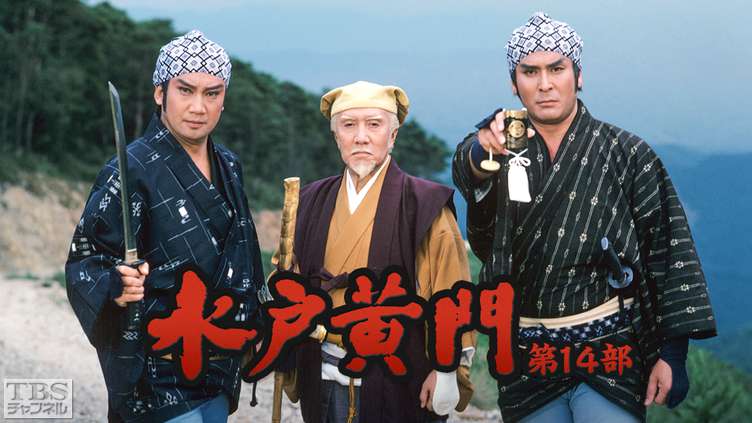
56年間も放送されていた、日本では知らない人はいないであろう
テレビドラマ。この番組について語りたいのはやまやまなんですが
大きく脱線するのでやめておきます。興味があればYoutube
観てみて下さい!
せっかくですからおみくじを引きましょう 200円です
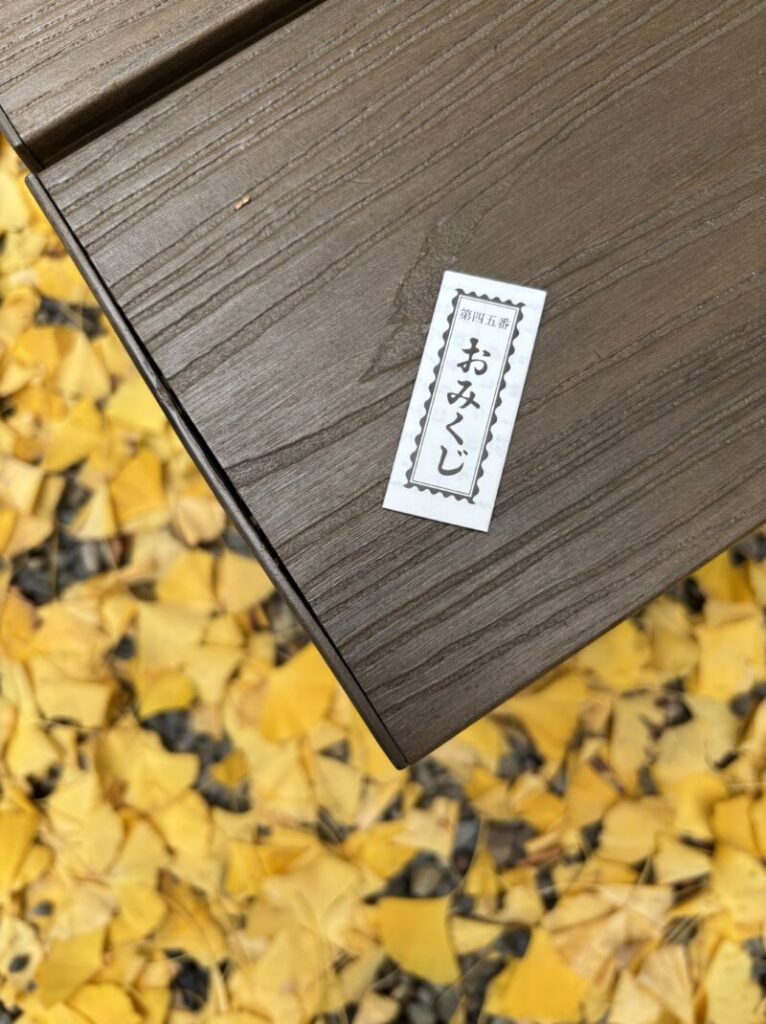
おみくじを引くのは参拝して、神様にご挨拶を済ませてからです
「今の自分に必要な教訓をください」と具体的に願いを
神様に念じながら引きます。引いた結果が気に入らなくても
一回きりですよ〜
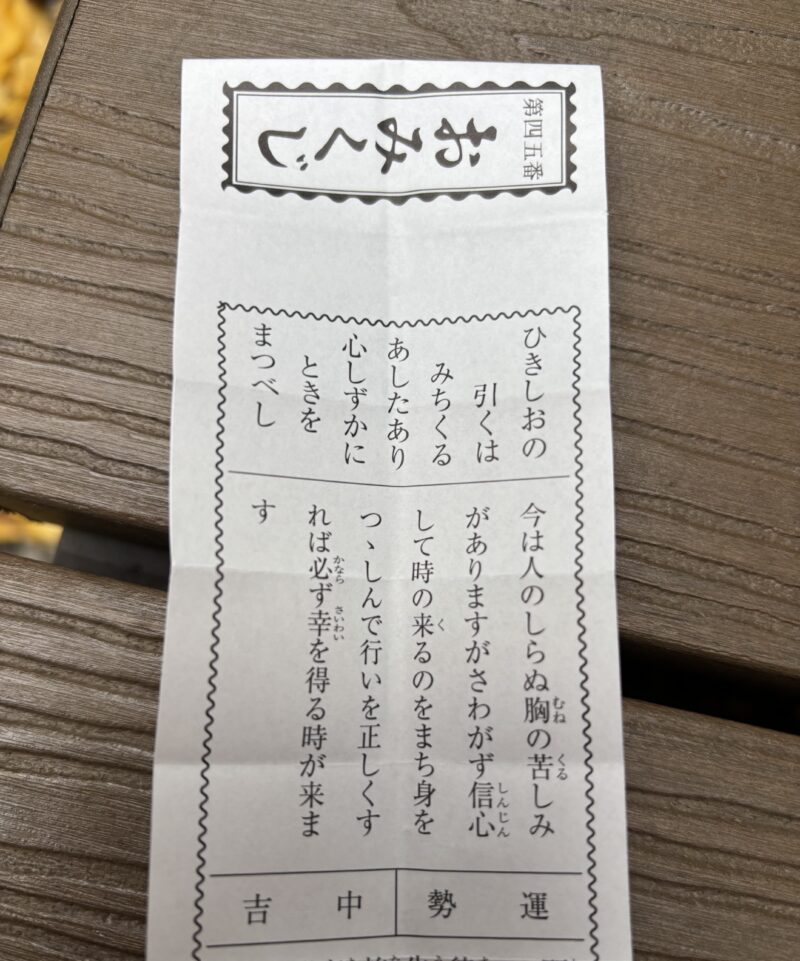
運勢は中吉でした!いい順に
大吉→吉or中吉→小吉→末吉→凶 と言われていますが
一律ではありません。そもそも凶は入っていない、という
噂もありますしね。落ち込んでしまう人もいるため。。。
吉の順番よりも、書かれている内容が重要です
私が引いたおみくじは、上に和歌、下にその解説が
書いてありました
ひきしおの 引くはみちくる あしたあり
心しずかに ときをまつべし
今は忍耐の時ですが、必ず幸運が訪れるという
力強いメッセージをいただきました!
下半分は、さらに詳細が書かれているので内緒です♡
内容をしっかり心に刻んだら、おみくじを結びましょう
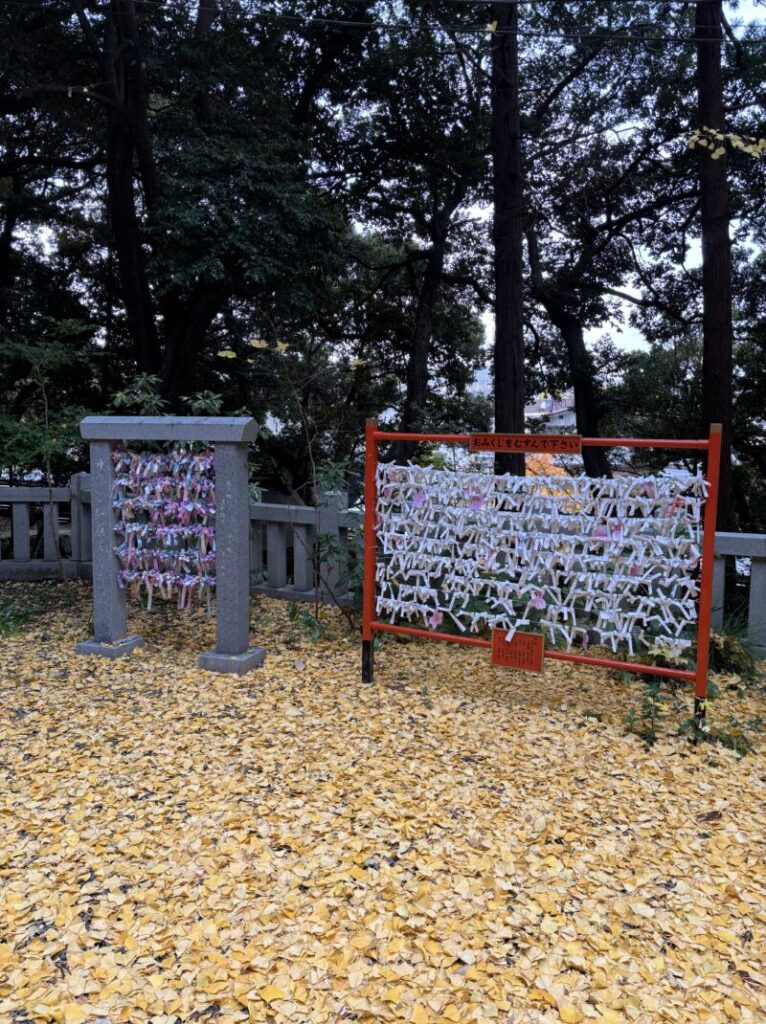
神様とのご縁を固く結びます。教訓を忘れないために
持って帰ってもいいんですよ。でも写真を撮っておけば
いつでも読み返せるので、結んだ方が両方のメリットがあると思います
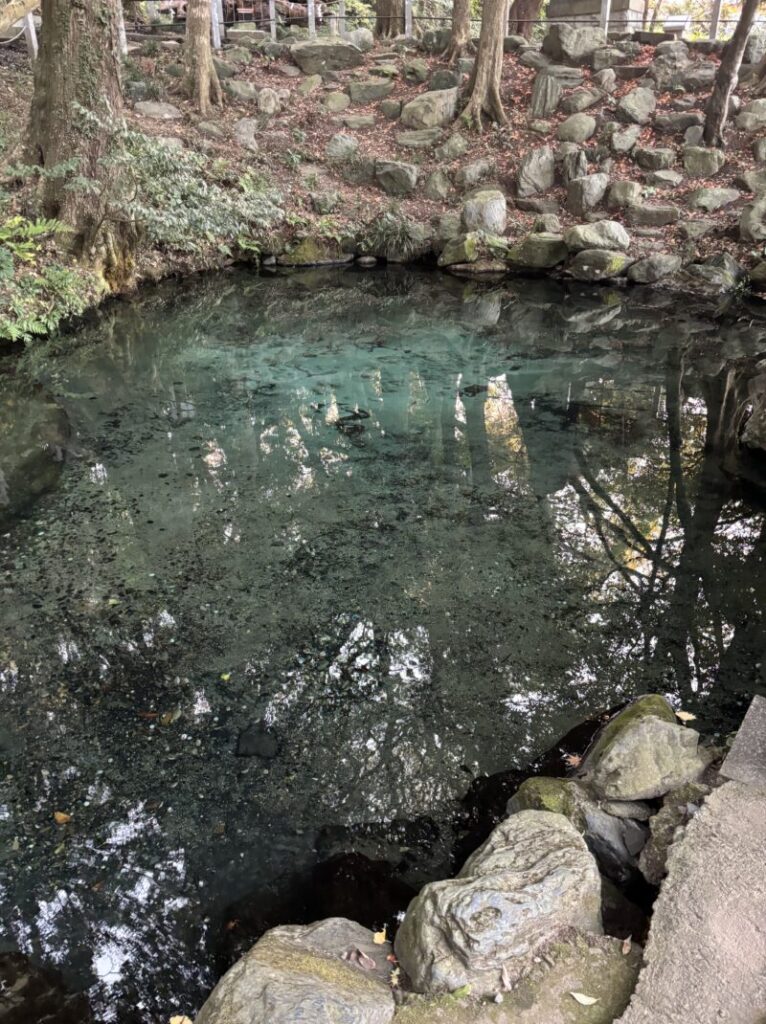
さらに隣に、泉のほとりにある小さな社があるので
そこもお参りします
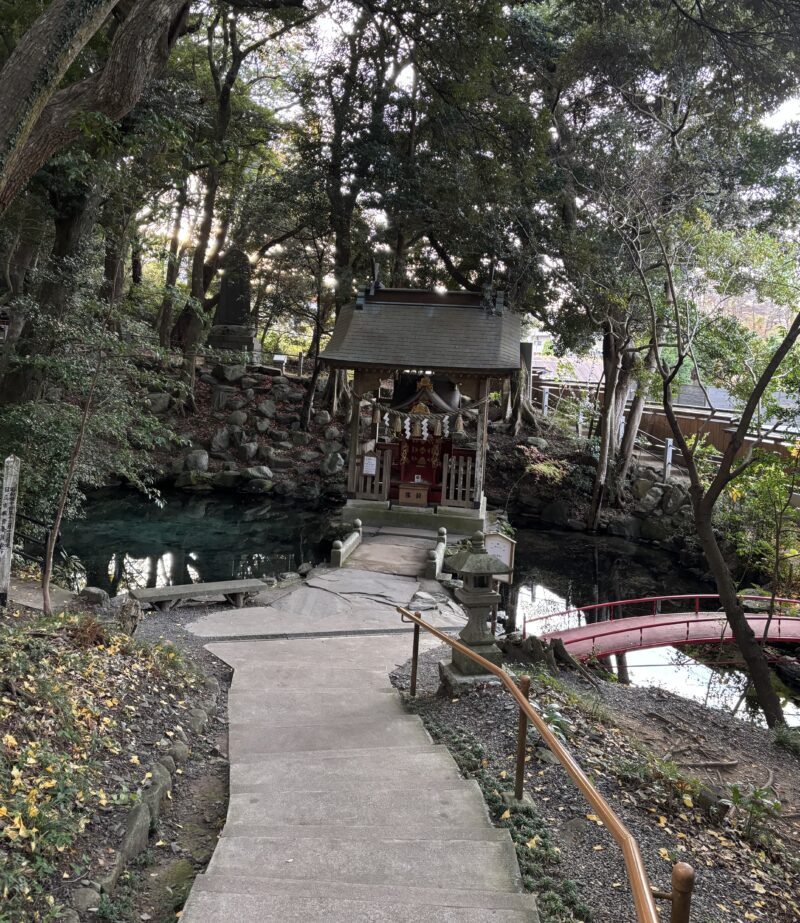
ここも同じく、ニ礼ニ拍手一礼で
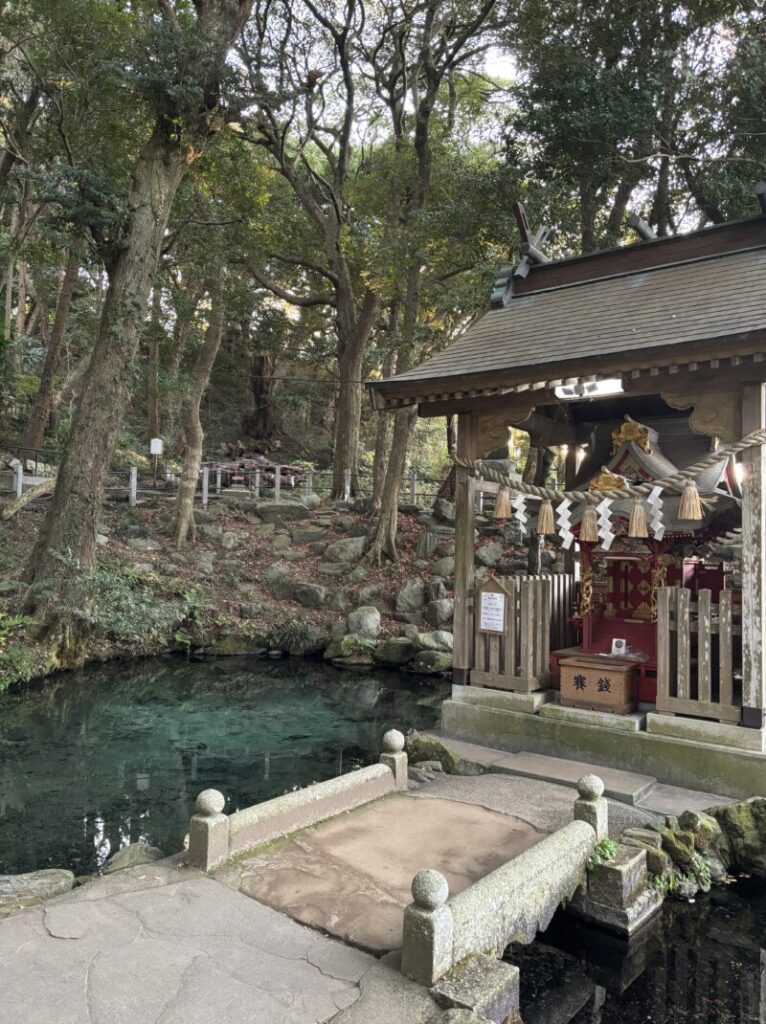
泉が湧き出ていて、神秘的な雰囲気です
生態系を乱すので、硬貨を入れてはいけませんよ!
最後までお付き合い下さり、ありがとうございます♪
オマケ:神社にあるトイレです
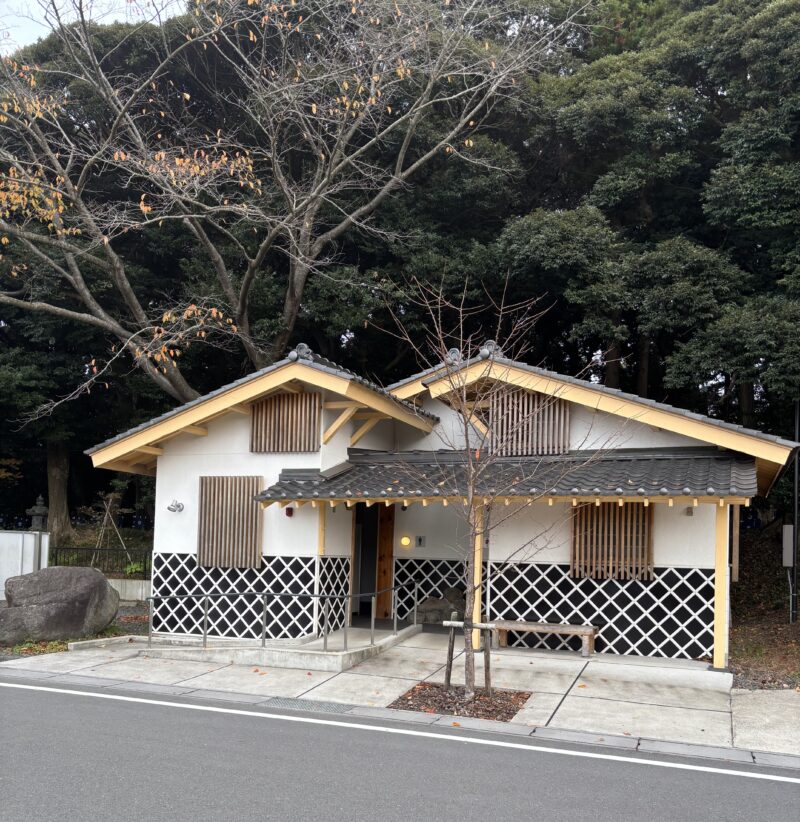
景観に馴染んだ作りで、野外トイレにしては
オシャレですよね。もちろんウォッシュレット完備!
Now it’s finally time to offer our prayers at the worship hall.
Worship Hall (Haiden)
The fallen ginkgo leaves added a beautiful touch —
it almost looked like it had been arranged on purpose!
How to Worship: Two Bows, Two Claps, One Bow
- First, place your offering into the box.
Let it drop in gently between the slats — don’t throw it.
If you toss it, it might bounce and fly back out!
- Ring the bell, if there is one.
This is a signal to call the deity.
It’s surprisingly hard to make it ring cleanly without the rope bumping awkwardly into the bell! - Bow deeply twice.
- Bring your hands together in front of your chest and clap twice.
This is when you make your wish or express your gratitude. - Finish with one deep bow.
It’s not exactly a secret trick, but at well-known shrines there are always many visitors.
So before your turn comes, you can simply watch the person ahead of you and learn from them!
That’s how I get through the purification ritual every time, too.
Even we Japanese forget the steps if we don’t go often.
The key is to act calmly — as if you totally know what you’re doing. 😉
Do you see the crest on the purple curtain in the back?
The Aoi crest is well known as the family emblem of the Tokugawa clan, who established the Edo shogunate.
The Aoi crest is used here because Tokugawa Mitsukuni —
lord of the Mito domain and one of the three branches of the Tokugawa family —
was a devoted follower of this shrine.
This TV drama ran for 56 years — practically everyone in Japan knows it.
I’d love to talk about it, but that would take us way off track…
If you’re curious, take a look on YouTube!
Anyway, since we’re here, let’s draw an omikuji (fortune slip).
It’s 200 yen.
You draw an omikuji only after you’ve finished your visit and greeted the deity.
While drawing it, focus on your wish — something like, “Please give me the lesson I need right now.”
Even if you don’t like the result, you only get one try!
I got chū-kichi (moderate good luck)!
People often say the general order from best to worst is:
Daikichi → Kichi or Chū-kichi → Shō-kichi → Sue-kichi → Kyō
—but this isn’t the same everywhere.
Some even say that “bad fortune” isn’t included at certain shrines,
so people won’t feel discouraged.
More important than the ranking is the message written inside.
The omikuji I drew had a waka poem at the top,
with an explanation written below it.
The message told me that this is a time for patience,
but that good fortune will definitely come my way —
a strong and encouraging reminder!
As for the detailed part written below… that stays secret. ♡
After taking the message to heart, tie your omikuji to the rack.
This symbolizes strengthening your bond with the deity.
You can also take it home if you want to remember the lesson,
but if you take a photo, you can always read it again —
so tying it gives you the best of both worlds.
Next, let’s also visit the small shrine by the spring right beside it.
You worship here in the same way — two bows, two claps, and one bow.
A natural spring flows here, giving the place a mystical atmosphere.
But don’t throw coins into the water — it harms the ecosystem!
Thank you so much for staying with me all the way to the end♪
Bonus: here’s the restroom at the shrine.
It blends beautifully into the surroundings, and for an outdoor restroom, it’s surprisingly stylish. And yes — it even has a bidet!