The English translation is below
地震列島に住む私達は、地震に慣れています
先日、久しぶりに震度4の地震がきまして、防災無線から
警告音が響き渡りました。ただ、揺れが始まった時、体感的に
震源地はそんなに近くないな、と感じ、揺れが収まれば何事も
なかったかのようにそれぞれ日常に戻りました。
日本では地震の規模を表す「マグニチュード」のほかに、
「その場所がどれくらい揺れたか」を示す「震度」を10段階で定めています
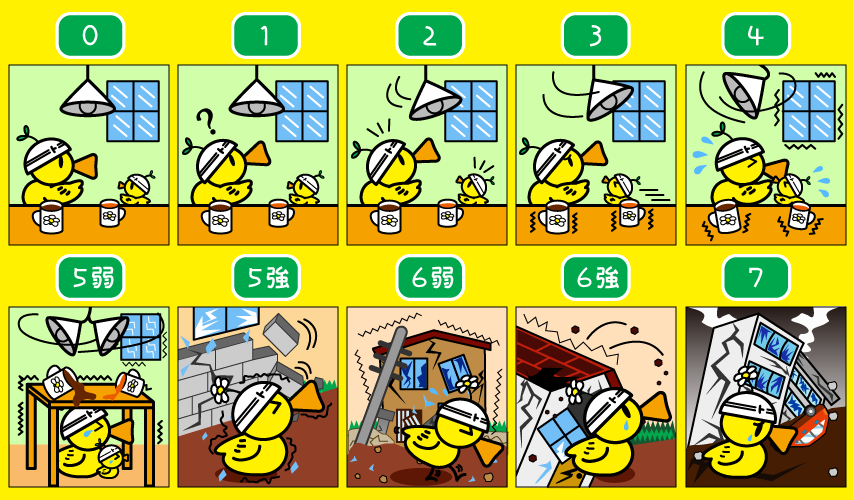
私達にとって震度4は、行動をピタッと止めて様子見
くらいのレベルです。震度3だと「今のショボかったね〜」
と笑い飛ばすくらいですが、さすがに震度5だとガスは
安全のため自動で止まります。物が倒れたりして
ちょっとした恐怖感はありますね。せめて寝ている時には
来ないで欲しい…
地震が多い国に住むがゆえの悲しい特殊能力を、私達は自嘲気味に
「地震ソムリエ」と呼んでいます(汗)
地震の直後、「今の、震度3くらいかな?」と推測し
その数分後の地震速報で「やっぱり3だった〜」などと
答え合わせしています
それだけではありません。地震の最中も、パニックにならず、
まず火の元を確認するなど、冷静に行動します。(できれば)
建物は耐震設計されているので、慌てて外へ飛び出すことなく
テーブルの下で揺れが収まるのを待つなど、避難訓練の教えを守ります
震源は近いのか、縦揺れか、横揺れか、揺れ方の「風味」を感じ取り
品のある落ち着きと優雅な振る舞いが(?)ワインの味を見極める
ソムリエに例えられています(誰にだ)
この資格、他の国では役に立たないし、皆さんは頼まれても
いらないと思いますが、私達をさらにレベルアップしてしまう
出来事がありました。15年前の、東日本大震災です
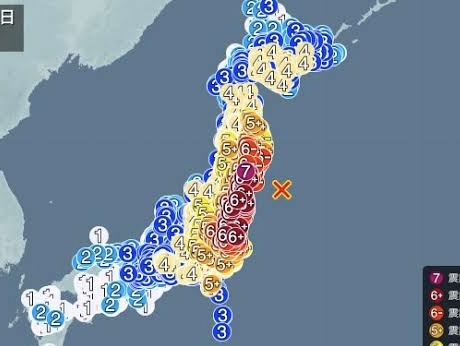
三陸沖で、マグニチュード9.0(国内観測史上最大)の
巨大地震が発生。私の住む地域でも震度6強を観測しました
これは本震と呼ばれるものですが、それだけじゃ終わらないんですよ
その後にも余震がひっきりなしに来て、その日のうちに震度5強が
3回くらい来たのを覚えています。
もう、太平洋プレートが一気に跳ねあがっちゃたものだから
あちこちで連動して、他の場所の地震を誘発しまくっていました
震度3,4なんて数えきれないほど。家は無事だったので避難所へは行かずに
自宅にいましたが、その夜は全く寝られる状態ではなく
すぐに動けるように、服を来たままの仮眠レベルでした。
引き続き、毎日毎日毎日毎日何時だろうと余震は来るので
朝までぐっすり寝られるようになったのは
地震から約1ヶ月たった頃でしょうか…
そんなサバイバルな中で、義務教育で得た知識をもとに
「震源地当てクイズ」というのを内輪でやっておりました
地震にはS波とP波というのかありまして
速いスピードで伝わるP波が、まず初期微動を引き起こし
遅れてきたS波が大きな主要動を引き起こします
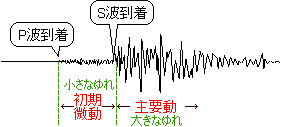
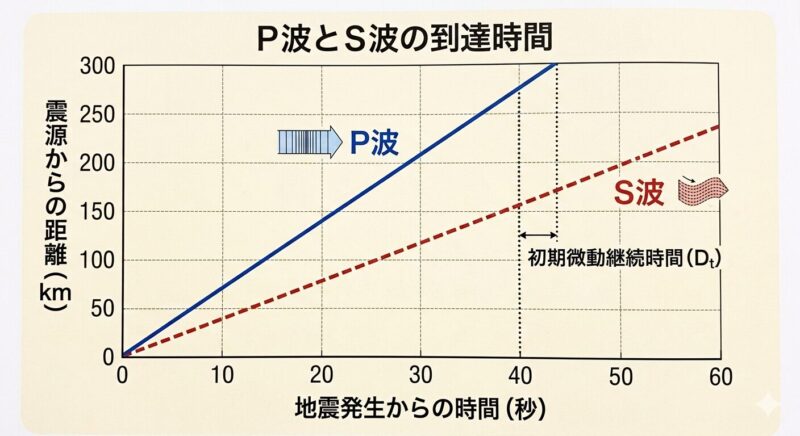
なんと!理科の知識も学べる「やわらかにほんご」‼︎
日本では中学生で学びます。グラフを読み取り、震源までの
距離を求める計算問題が出たりしますからね
つまり、P波とS波の間に時間差があるほど
自分のいる場所から震源地は遠い、ということが分かります
最初の揺れから、次の大きい揺れまで何秒くらいあるのかで
およその距離を知ることができるのです
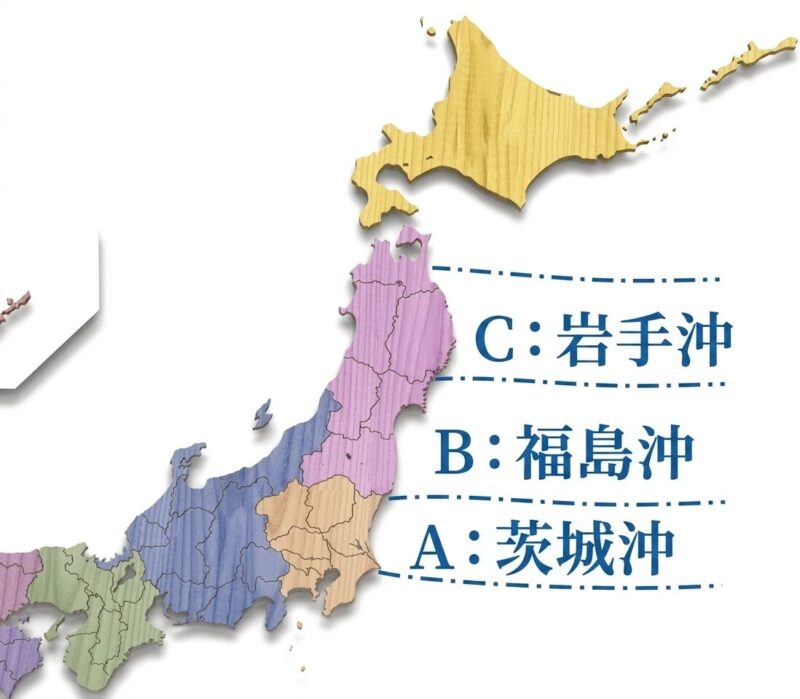
私は茨城県に住んでいるのですが、余震が起こっていたのは
ほとんどこの点線の範囲なので、地震があったら震源が
A:茨城沖 B:福島沖 C:岩手沖 のどこかを当てる
とういうことをしていました。もちろん計算はしません
感覚だけで身につけるのです!
もはや地震ソムリエ、グレードアップの短期集中特訓コースです
日々の経験をイヤでも重ねることによって
80%以上の確率で当てられるようになってしまいました…
当たった時は「よっしゃ!」って思うんですけど
どうなの、このスキル…
ここまで読んでくださった皆さんは、日本怖え、と思うかも
知れませんが、頼もしい建物の耐震構造にょって
最小限の被害で暮らせています。震度6強でも、倒れた家なんて
見なかったですよ。空き家で木造のどんなにボッロイ家でも!
1981年以降に建てられた、新耐震基準を満たしている家なら
震度7でも崩壊しないです。高層ビルや大規模なマンションなら
さらに特別な構造になっているので、皆さんが泊まるホテルなどは
きっと私たちの家より安全な場所ですよ
もし日本で地震に遭遇したら、その場にいる日本人ソムリエの
行動をマネしていれば大丈夫なんじゃないかな
震度5までなら、「びっくりした〜!」ですみますからご安心を♪
Living in a country prone to earthquakes, we’ve grown quite used to them.
The other day, we experienced a level 4 earthquake on Japan’s seismic intensity scale for the first time in a while, and the warning alarm echoed through the disaster prevention system.
However, when the shaking began, I had a feeling that the epicenter wasn’t very close. Once the tremor subsided, everyone simply went back to their daily lives as if nothing had happened.
In Japan, in addition to magnitude, which measures the overall size of an earthquake, we also use a ten-level seismic intensity scale that indicates how strongly the ground shakes in a specific location.
For us, a level 4 on the seismic intensity scale is about the point where we stop what we’re doing and wait to see what happens.
At level 3, we might even laugh it off and say, “That was nothing, wasn’t it?”
But at level 5, gas supply is automatically shut off for safety. Objects may fall over, and there’s definitely a sense of fear.
At the very least, I just hope earthquakes don’t hit while I’m asleep…
Perhaps it’s a somewhat sad “special skill” that comes from living in an earthquake-prone country—we jokingly refer to it as being an “earthquake sommelier.”
Right after a quake, we might guess, “That felt like about a level 3,” and then check the earthquake report a few minutes later—“Yep, it was a 3 after all.”
And that’s not all. Even during a quake, we try not to panic. Instead, we calmly take action, like checking for fire hazards first (if possible).
Since buildings are designed to be earthquake-resistant, we don’t rush outside in a panic. We follow what we’ve learned in evacuation drills—taking cover under a table and waiting for the shaking to stop.
We can even sense whether the epicenter is nearby, and whether the shaking is vertical or horizontal—almost like picking up on the “flavor” of the movement.
That sense of composure and (supposedly) refined judgment is what likens us to sommeliers who evaluate the taste of wine… or so we say.
This “skill” isn’t much use outside Japan, and I doubt anyone would want it even if offered.
However, there was an event that pushed us to an entirely different level—the Great East Japan Earthquake 15 years ago.
A massive earthquake struck off the Sanriku coast, registering a magnitude of 9.0—the largest ever recorded in Japan.
In the area where I live, the seismic intensity reached upper 6.
This was what is called the main shock—but that wasn’t the end of it.
After that, aftershocks kept coming one after another. I remember that on the very same day, we experienced strong aftershocks at around level 5 three times.
It felt as if the Pacific Plate had suddenly snapped upward, triggering earthquakes in other areas in a chain reaction.
There were too many quakes at levels 3 and 4 to even count. Fortunately, our house was unharmed, so we stayed at home instead of going to an evacuation center. But that night, there was no way we could sleep.
We just dozed off in our clothes, ready to move at any moment.
And the aftershocks kept coming—day after day, over and over again, no matter the time.
It probably took about a month before we were finally able to sleep soundly through the night again…
Even in the midst of such a survival-like situation, we found ourselves playing a little “guess the epicenter” game among us, based on what we had learned in compulsory education.
Earthquakes involve two types of waves, known as P-waves and S-waves.
The faster-moving P-waves arrive first, causing the initial, smaller tremors, while the slower S-waves follow, bringing the stronger, more noticeable shaking.
Surprise! You can even learn a bit of science from Yawaraka Nihongo!
In Japan, this is something we study in junior high school. We even get math problems where we read graphs and calculate the distance to the epicenter.
In other words, the longer the time gap between the P-waves and S-waves, the farther the epicenter is from where you are.
By counting how many seconds pass between the initial tremor and the stronger shaking that follows, you can estimate the approximate distance to the epicenter.
I live in Ibaraki Prefecture, and most of the aftershocks were occurring within this dotted area. So whenever an earthquake hit, we would try to guess where the epicenter was—
A: off Ibaraki, B: off Fukushima, or C: off Iwate.
Of course, we didn’t actually do any calculations. It was all based on instinct!
At that point, it was basically an intensive crash course in becoming a higher-level “earthquake sommelier.”
By accumulating experience day after day—whether we liked it or not—we eventually got to the point where we could guess correctly over 80% of the time…
And when we got it right, we’d think, “Yes!”—but honestly… what do you even do with a skill like this?
After reading this, some of you might be thinking, “Japan sounds scary…”
But thanks to reliable earthquake-resistant construction, we are able to live with minimal damage. Even during a seismic intensity of upper 6, I didn’t see any houses collapse—not even old, vacant wooden ones in really poor condition.
Any house built after 1981, under Japan’s updated seismic standards, is designed not to collapse even at intensity level 7. High-rise buildings and large apartment complexes are built with even more advanced structural systems, so places like hotels—where you might stay—are likely even safer than our own homes.
If you ever experience an earthquake in Japan, you’ll probably be fine just by following the actions of the local “earthquake sommeliers” around you.
As long as it’s up to level 5, it’s usually nothing more than a “That surprised me!” moment—so please don’t worry♪