The English translation is below
前回は「昭和のヤバい歌」を、時代背景とともに味わいました!
男性が外で稼ぎ、女性が家事・育児を担っていた社会で男がリードし、女が従う、というような
価値観だった時代です
男性は自分のことを「俺」と呼び、女性を
「お前」と呼ぶ主従関係が
歌詞にも表れていました。(ケッ)
世の中、恋愛ソングばっかりですが
結婚ソングとなると数えるほどしかありません
その中でも男性目線の結婚ソングは、
男性の決意や、女性に向けての思いがモロに
出るので変化を感じやすいです。
一馬力で家族を支えていた昭和の男は「俺が守る」「男なら強くあれ!」「弱音を吐くな‼︎」「泣くんじゃなーい‼︎!」でしたから(笑)
今回は、それが「平成」〜そして今の「令和」に向かってどんなふうに変わっていったのか、
時代背景と共に見ていきたいと思います
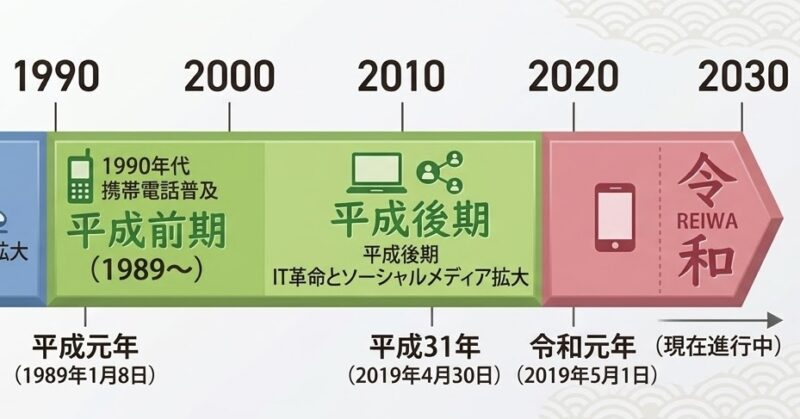
平成前期 自分が相手を幸せにする
共働き世帯が専業主婦世帯を逆転!昭和の時代は「妻が家にいる」のがかなり普通でしたが
完全に勢力図が変わってきました。おまけに離婚も激増!どんなに辛くても耐えて、男を支えて
男についていく〜というような価値観を
疑い始め、「この関係、本当に続ける必要ある?」という考えが頭をよぎるワケです。結婚を一生維持することだけが唯一の選択肢ではなく
離婚できる社会になってきたという変化がみられます
歌詞での1番大きな変化は、自分を「僕」と
呼び、相手を「君」と呼ぶようになったこと!「俺/お前」の上下関係から、相手を対等に見る
呼び方に変わりました。このたった1、2文字で
人間関係が見えてくるんですよ。日本語は
一人称・二人称そのものに関係性が乗っかるので「俺/お前」→「僕/君」への変化は、実はすごいことなのです
山根康弘『Get along together』
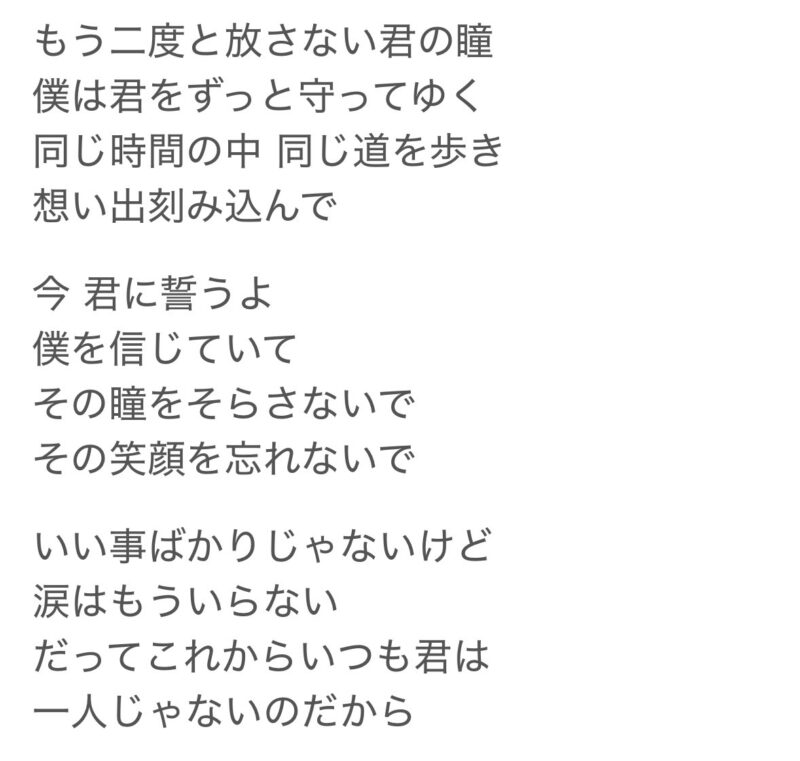
とはいってもまだこの頃は、男性が女性を
守るもの、という価値観が出てますね。
信じていて、とか、瞳そらさないで、笑顔
忘れないでって、やっぱり要求が多いな(笑) 将来への責任を引き受け、愛する女性を幸せにするという決意が表れていますね
CHAGE &ASKA 『SAY YES』
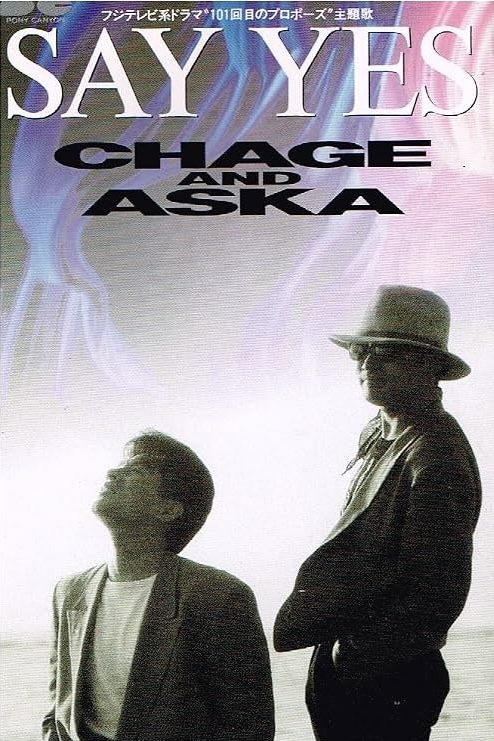
これはドラマの主題歌ということもあり
280万枚以上の売り上げでした!
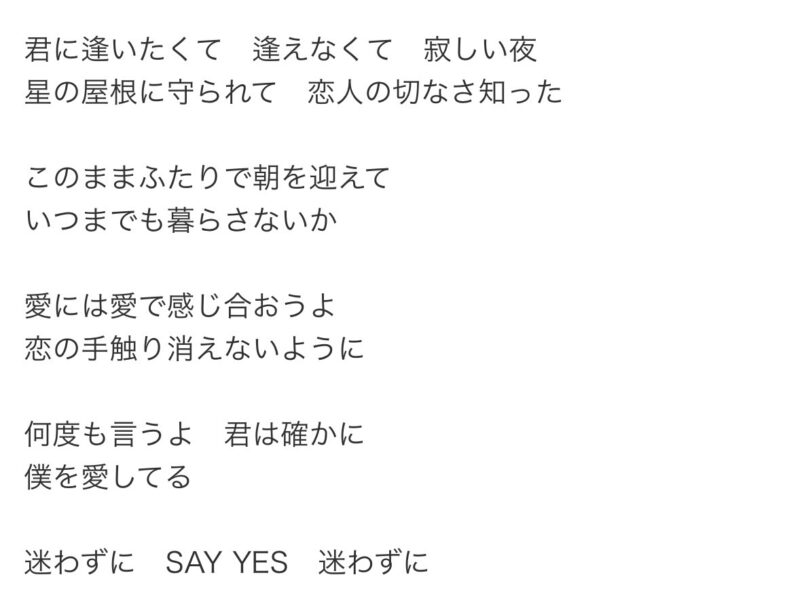
ストレートに「結婚しよう」から
「二人で暮らさないか?」って控えめな
問いかけになってきました。愛情を確認したり
強気と弱気のはざまで揺れる男心♪
平成後期 二人で幸せをつくる
もはや共働きが7割近くなったうえ、子供が
できてもパートではなくフルタイムで働く
女性も増えてきました。平成初期の共働きは
「景気低迷による家計の補填」の意味合いが
多かったのですが、平成後期になると
「自立した対等なパートナーシップ」という
意識が定着し、社会的な標準モデルとして
認知されるようになりました
コブクロ 『永遠にともに』

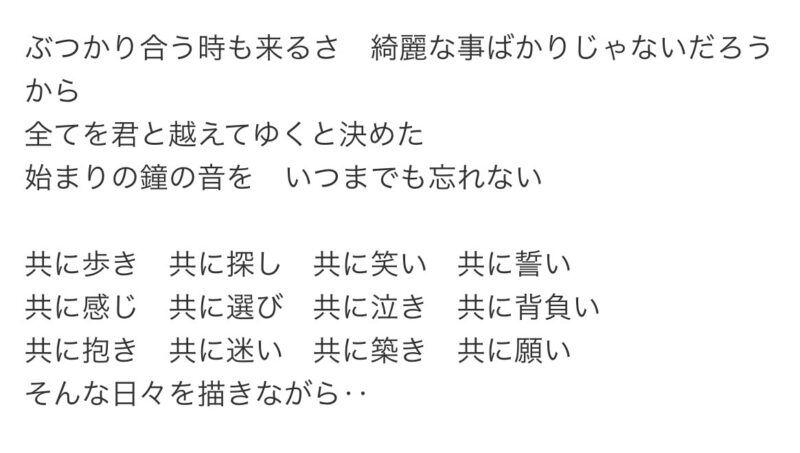
ぶつかり合うことはあっても共に乗り越えて
いく。守る側、守られる側というより二人で
人生を築いていくという決意です
親戚の結婚式の披露宴で、新郎がこの曲を歌っているのを聴いたことがあります。サビの部分は「共に、共に」とたたみかけるので息継ぎが
困難らしく、笑っちゃいけないんですけど
かなりシンドそうに歌っていました♪
今もこの歌を聴くと、あの新郎の苦しそうな
顔が目に浮かびます(笑)
back number 『花束』
ワタクシも好きなバンド、back numberの歌も独断で入れておきます
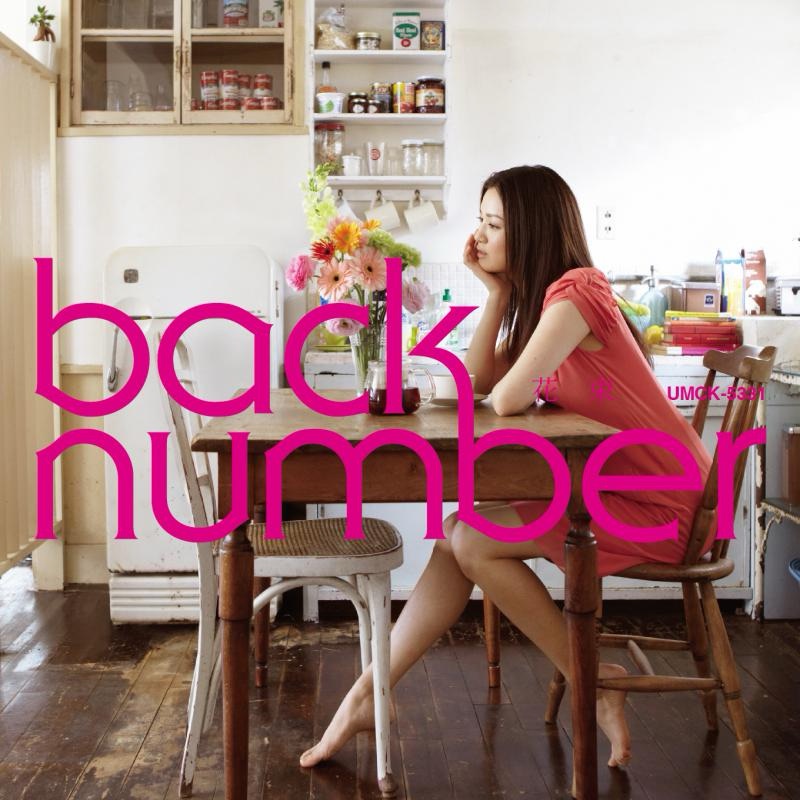
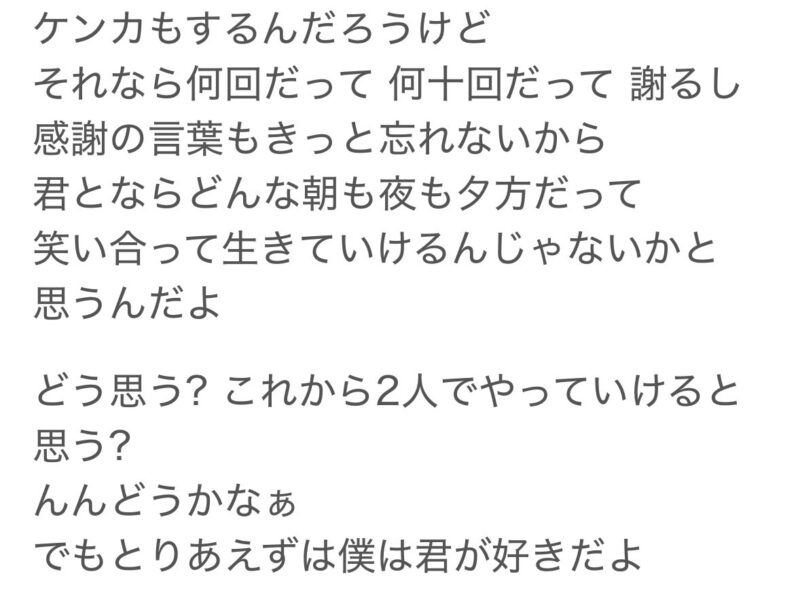
・・・結婚するならこんな男がいい(涙)
この曲はさすがに披露宴では歌えないでしょうが(笑)「今、君が好きだということは確か。
だから一緒にいたい」と、男性が答えを持って
いるわけじゃなく、「二人で決めよう」になっています
結婚するのが当たり前の時代から、結婚して二人でやっていけるか、を考える時代になりました
「関白宣言」から30年余り。ついに、ついに、
ここまできたのであります・・・
In the previous article, we took a look at some of the outrageous songs of the Showa era, along with the social attitudes of the time. It was an era when men were expected to earn a living outside the home while women took care of housework and child-rearing. The prevailing mindset was that men should take the lead and women should follow. That male-dominated dynamic even showed up in song lyrics, with men referring to themselves as ore (“I,” a masculine and often assertive way of saying it) and addressing women as omae (“you,” which can sound blunt or condescending depending on the relationship). (Ugh!)
There are love songs everywhere, but songs about marriage are relatively few and far between. Among them, wedding songs written from a man’s perspective make it particularly easy to spot changes in social attitudes, because they lay bare a man’s resolve and his feelings toward his partner.
In the Showa era, men were expected to support their entire families on a single income. The message was pretty much: “I’ll protect you.” “A real man has to be strong!” “Don’t show weakness!!” “And don’t you dare cry!!!”
This time, let’s explore how those attitudes evolved through the Heisei era and into the Reiwa era we live in today, looking at the social changes behind the songs along the way.
Early Heisei Era: “I’ll Make You Happy”
The number of dual-income households overtook that of single-income households with a full-time homemaker. During the Showa era, it was quite common for wives to stay home, but the balance of power between these two types of households was shifting dramatically. On top of that, divorce rates were rising sharply!
People were beginning to question the old expectations that women should endure hardship, support their husbands, and follow them no matter what. Instead, a thought might cross their minds: “Do I really need to stay in this relationship?”
This marked a social shift: marriage no longer had to be maintained for life at all costs, and divorce was becoming a more viable option.
But the biggest change in song lyrics was the way men referred to themselves and their partners. Instead of ore (“I”) and omae (“you”), men increasingly used boku (“I”) and kimi (“you”).
This shift moved away from the hierarchical feel of ore/omae toward a more equal way of addressing one another. Just one or two words can tell you a lot about the relationship between two people!
In Japanese, the choice of first- and second-person pronouns itself carries implications about the relationship between the speakers. So the shift from ore/omae to boku/kimi was actually a pretty big deal.
Yasuhiro Yamane – “Get Along Together”
【I’ll never let you go again, my love.
I’ll always be there to protect you.
We’ll share the same moments,
walk the same road,
and carve our memories into our hearts.
Today, I make this promise to you.
Believe in me.
Don’t turn away from my eyes.
Never forget that smile of yours.
Life won’t always be easy,
but there’s no need for tears anymore.
Because from now on,
you’ll never have to face life alone.】
Even so, we can still see the traditional belief that a man should protect a woman. “Believe in me,” “Don’t look away,” “Don’t forget to smile”… He sure has a lot of requests, doesn’t he? (LOL)
The song expresses a man’s determination to take responsibility for their future and make the woman he loves happy.
CHAGE and ASKA – “SAY YES”
This song was the theme song for a TV drama, and it sold more than 2.8 million copies!
【On lonely nights when I long to see you
but can’t be with you,
beneath a roof of stars,
I came to know the ache of being in love.
Why don’t we stay together,
wake up to the morning side by side,
and live like this forever?
Let’s share our love,
and keep the spark of romance alive.
so that the touch of it never fades.
I’ll say it again and again:
you really do love me.
Don’t hesitate. Say yes.
Don’t hesitate.】
The message shifts from a straightforward “Let’s get married” to the more tentative question, “Why don’t we live together?”
There’s the desire to make sure their love is mutual, along with a man’s heart wavering between confidence and insecurity. ♪
Late Heisei Era: Building a Happy Life Together
By this time, nearly 70% of households with married couples were dual-income households. More and more women were also working full-time after having children, rather than switching to part-time jobs.
In the early Heisei era, many women worked to supplement the household income amid the economic downturn. By the late Heisei era, however, dual-income households had increasingly come to represent an independent, equal partnership, becoming recognized as a standard family model in society.
Kobukuro – “Towa ni Tomo ni” (永遠にともに)
【There will be times when we clash,
because life won’t always be beautiful.
But I’ve decided to face it all with you.
I’ll never forget the sound of the bells
that marked the beginning of our journey.
Walking together, searching together,
laughing together, making promises together,
feeling together, choosing together,
crying together, bearing the weight together,
embracing together, losing our way together,
building together, dreaming together—
as I picture all those days we’ll share.】
Even when they clash, they face difficulties and overcome them together. Rather than one person protecting the other, the song expresses a commitment to building a life together as equals.
I once heard the groom sing this song at the reception for a relative’s wedding. The chorus keeps repeating “together, together,” making it surprisingly difficult to catch a breath. I shouldn’t laugh, but he looked like he was really struggling up there! ♪ Even now, whenever I hear this song, I picture that groom’s agonized expression. (LOL)
back number – “Hanataba” (Bouquet)
I’m also going to include a song by one of my own favorite bands, back number. This is entirely my personal choice, of course!
【We’ll probably argue sometimes, too.
But if we do, I’ll apologize,
as many times as it takes, even dozens of times.
And I’ll never forget to say thank you.
With you, I think we could laugh together
and make a life together,
through every morning, every night,
and every evening.
Do you think we could make it work,
just the two of us, from here on out?
Hmm… I’m not sure.
But for now, at least,
I know I love you.】
…This is the kind of guy I’d want to marry. (Tears)
This song probably wouldn’t be suitable for singing at a wedding reception, though! (LOL)
The message is essentially: “One thing I know for sure is that I love you now. That’s why I want to be with you.”
The man doesn’t pretend to have all the answers. Instead of deciding everything himself, he suggests that they figure things out together.
We’ve moved from an era when getting married was simply taken for granted to one in which couples ask themselves whether they can make a life together.
More than 30 years after “Kanpaku Sengen” (Declaration of a Domestic Dictator), we’ve finally, finally come this far…